

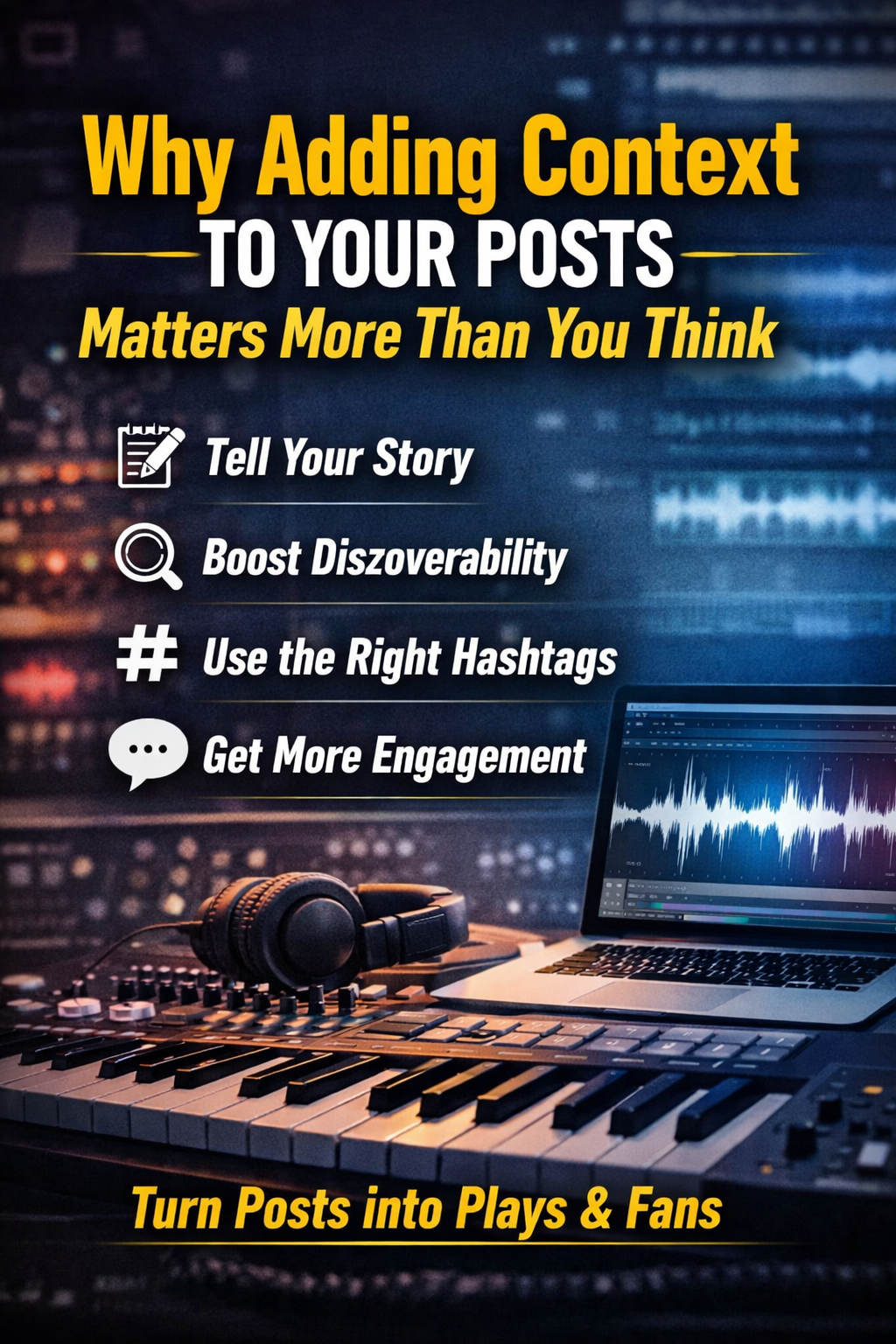
Why Adding Context to Your Posts Matters More Than You Think!
One of the most common mistakes on music platforms is posting a track, photo, or video without any context.
You upload the file, hit publish, and expect people to listen.
But in reality, posts without context often get very few views, very little engagement, and almost no discoverability.
If you want people to discover your music, understand your work, and connect with you as an artist, text matters.
A lot.
Let’s talk about why.
𝗕𝗲𝘁𝘁𝗲𝗿 𝗳𝗼𝗿 𝗚𝗼𝗼𝗴𝗹𝗲 𝗜𝗻𝗱𝗲𝘅𝗶𝗻𝗴
Adding context, descriptions, and hashtags to your posts doesn’t just help listeners discover your music—it also makes your content more search-engine friendly.
Google and other search engines rely on text to understand and index your content, so including clear titles, keywords, and descriptive text increases the chances your music will appear in search results. This means more visibility, more plays, and a bigger audience over time.
𝗠𝘂𝘀𝗶𝗰 𝗔𝗹𝗼𝗻𝗲 𝗗𝗼𝗲𝘀𝗻’𝘁 𝗧𝗲𝗹𝗹 𝘁𝗵𝗲 𝗪𝗵𝗼𝗹𝗲 𝗦𝘁𝗼𝗿𝘆
When someone uploads an audio file without any description, listeners have no idea what they are about to hear.
Questions immediately arise:
🔸What genre is it?
🔸Who made it?
🔸What inspired the track?
🔸Is it a demo, a finished release, or a work in progress?
🔸Are you looking for feedback or just sharing?
Without context, the listener is left guessing. And most people on the internet simply won’t spend time guessing.
They scroll past.
Adding even a short explanation helps people connect with your post instantly.
𝗖𝗼𝗻𝘁𝗲𝘅𝘁 𝗛𝗲𝗹𝗽𝘀 𝗣𝗲𝗼𝗽𝗹𝗲 𝗗𝗶𝘀𝗰𝗼𝘃𝗲𝗿 𝗬𝗼𝘂𝗿 𝗠𝘂𝘀𝗶𝗰
Search engines and AI systems cannot truly understand audio files on their own. They rely heavily on textual information.
That means things like:
🔸titles
🔸descriptions
🔸keywords
🔸genres
🔸hashtags
🔸background stories
When you include text in your post, you create discoverable content. Suddenly your track can appear in searches like:
🔸“new underground techno track”
🔸“indie artist bedroom production”
🔸“experimental ambient music”
Without text, your post is basically invisible outside the platform. With text, it becomes part of the searchable web.
𝗛𝗮𝘀𝗵𝘁𝗮𝗴𝘀 𝗔𝗺𝗽𝗹𝗶𝗳𝘆 𝗬𝗼𝘂𝗿 𝗥𝗲𝗮𝗰𝗵
Hashtags act as signposts that guide listeners to your content, helping people find your music based on their interests. Think of them as a bridge between your post and a wider audience.
Using relevant hashtags can:
🔸Connect your track to a specific genre (#Synthwave, #LoFiBeats, #IndieRock)
🔸Highlight your production style (#BedroomProducer, #AnalogSynth, #DIYMusic)
🔸Tag themes, moods, or inspirations (#LateNightVibes, #CityLights, #ChillSession)
When done smartly, hashtags help your post appear in searches, on feeds, and even in AI-driven recommendations. Without them, your music might only reach the people already following you — but with them, it can reach the right listeners who are actively looking for exactly what you’re creating.
Pro Tip: 5–10 highly relevant hashtags are usually more effective than dozens of generic ones. Make each tag count.
𝗬𝗼𝘂𝗿 𝗦𝘁𝗼𝗿𝘆 𝗠𝗮𝗸𝗲𝘀 𝗬𝗼𝘂𝗿 𝗠𝘂𝘀𝗶𝗰 𝗠𝗼𝗿𝗲 𝗜𝗻𝘁𝗲𝗿𝗲𝘀𝘁𝗶𝗻𝗴
Music is emotional, personal, and creative. People love hearing the story behind a track.
For example:
🔸Did you produce it in your bedroom studio?
🔸Was it inspired by a city, a relationship, or a late-night session?
🔸Is it your first release?
🔸Did you experiment with new synths or plugins?
These small details create a connection between the artist and the listener. Listeners are far more likely to engage with a track when they feel like they understand the artist behind it.
𝗧𝗲𝘅𝘁 𝗘𝗻𝗰𝗼𝘂𝗿𝗮𝗴𝗲𝘀 𝗖𝗼𝗻𝘃𝗲𝗿𝘀𝗮𝘁𝗶𝗼𝗻
A post with context invites discussion.
Instead of just uploading a file, you can ask things like:
“What do you think about the mix?”
“Any suggestions for improving the bassline?”
“Does the drop work for you?”
Suddenly your post becomes interactive. People comment, give feedback, and start conversations. That is how real communities grow.
𝗣𝗼𝘀𝘁𝘀 𝗪𝗶𝘁𝗵 𝗖𝗼𝗻𝘁𝗲𝘅𝘁 𝗟𝗼𝗼𝗸 𝗠𝗼𝗿𝗲 𝗣𝗿𝗼𝗳𝗲𝘀𝘀𝗶𝗼𝗻𝗮𝗹
When people browse a music community, they naturally gravitate toward posts that look thoughtful and complete.
Compare these two examples:
Post A:
Audio file uploaded
Post B:
“New melodic techno track I produced last week. Inspired by late-night drives through the city and a lot of analog synth experimentation. I’d love to hear what you think about the breakdown around 2:10.”
Which one would you click? Exactly. Context makes your content feel intentional, artistic, and engaging.
𝗘𝘃𝗲𝗻 𝗮 𝗙𝗲𝘄 𝗦𝗲𝗻𝘁𝗲𝗻𝗰𝗲𝘀 𝗠𝗮𝗸𝗲 𝗮 𝗛𝘂𝗴𝗲 𝗗𝗶𝗳𝗳𝗲𝗿𝗲𝗻𝗰𝗲
You don’t need to write an essay every time you post. Sometimes just a few lines are enough.
For example:
🔸what the track is
🔸what genre it belongs to
🔸what inspired it
🔸what kind of feedback you want
Three or four sentences can already make your post ten times more interesting.
𝗧𝗵𝗶𝗻𝗸 𝗼𝗳 𝗬𝗼𝘂𝗿 𝗣𝗼𝘀𝘁 𝗟𝗶𝗸𝗲 𝗮 𝗠𝗶𝗻𝗶 𝗠𝘂𝘀𝗶𝗰 𝗕𝗹𝗼𝗴
Every post you create can become a small piece of your artistic identity. Over time, people start recognizing your style, your ideas, and your creative process. Your posts become a timeline of your growth as a musician.
Years later, you might look back and see:
🔸how your production improved
🔸how your sound evolved
🔸how your community supported you
That is the beauty of sharing your story along with your music.
𝗛𝗲𝗹𝗽 𝗢𝘁𝗵𝗲𝗿𝘀 𝗗𝗶𝘀𝗰𝗼𝘃𝗲𝗿 𝗚𝗿𝗲𝗮𝘁 𝗠𝘂𝘀𝗶𝗰
Context also helps other members find music they enjoy. If someone loves synthwave, techno, or indie rock, a clear description helps them decide quickly whether your track fits their taste.
This makes the entire platform more enjoyable for everyone. Music becomes easier to explore, easier to discuss, and easier to appreciate.
𝗙𝗶𝗻𝗮𝗹 𝗧𝗵𝗼𝘂𝗴𝗵𝘁𝘀
Uploading music is just the first step. Adding context and hashtags transforms your post from a simple upload into a story, a conversation, and a discoverable piece of content.
So the next time you share a track, take a moment to tell us something about it:
What inspired you?
What were you experimenting with?
What do you hope listeners will feel when they hear it?
Your music deserves to be heard — and your story deserves to be told.
🎵
One of the most common mistakes on music platforms is posting a track, photo, or video without any context.
You upload the file, hit publish, and expect people to listen.
But in reality, posts without context often get very few views, very little engagement, and almost no discoverability.
If you want people to discover your music, understand your work, and connect with you as an artist, text matters.
A lot.
Let’s talk about why.
𝗕𝗲𝘁𝘁𝗲𝗿 𝗳𝗼𝗿 𝗚𝗼𝗼𝗴𝗹𝗲 𝗜𝗻𝗱𝗲𝘅𝗶𝗻𝗴
Adding context, descriptions, and hashtags to your posts doesn’t just help listeners discover your music—it also makes your content more search-engine friendly.
Google and other search engines rely on text to understand and index your content, so including clear titles, keywords, and descriptive text increases the chances your music will appear in search results. This means more visibility, more plays, and a bigger audience over time.
𝗠𝘂𝘀𝗶𝗰 𝗔𝗹𝗼𝗻𝗲 𝗗𝗼𝗲𝘀𝗻’𝘁 𝗧𝗲𝗹𝗹 𝘁𝗵𝗲 𝗪𝗵𝗼𝗹𝗲 𝗦𝘁𝗼𝗿𝘆
When someone uploads an audio file without any description, listeners have no idea what they are about to hear.
Questions immediately arise:
🔸What genre is it?
🔸Who made it?
🔸What inspired the track?
🔸Is it a demo, a finished release, or a work in progress?
🔸Are you looking for feedback or just sharing?
Without context, the listener is left guessing. And most people on the internet simply won’t spend time guessing.
They scroll past.
Adding even a short explanation helps people connect with your post instantly.
𝗖𝗼𝗻𝘁𝗲𝘅𝘁 𝗛𝗲𝗹𝗽𝘀 𝗣𝗲𝗼𝗽𝗹𝗲 𝗗𝗶𝘀𝗰𝗼𝘃𝗲𝗿 𝗬𝗼𝘂𝗿 𝗠𝘂𝘀𝗶𝗰
Search engines and AI systems cannot truly understand audio files on their own. They rely heavily on textual information.
That means things like:
🔸titles
🔸descriptions
🔸keywords
🔸genres
🔸hashtags
🔸background stories
When you include text in your post, you create discoverable content. Suddenly your track can appear in searches like:
🔸“new underground techno track”
🔸“indie artist bedroom production”
🔸“experimental ambient music”
Without text, your post is basically invisible outside the platform. With text, it becomes part of the searchable web.
𝗛𝗮𝘀𝗵𝘁𝗮𝗴𝘀 𝗔𝗺𝗽𝗹𝗶𝗳𝘆 𝗬𝗼𝘂𝗿 𝗥𝗲𝗮𝗰𝗵
Hashtags act as signposts that guide listeners to your content, helping people find your music based on their interests. Think of them as a bridge between your post and a wider audience.
Using relevant hashtags can:
🔸Connect your track to a specific genre (#Synthwave, #LoFiBeats, #IndieRock)
🔸Highlight your production style (#BedroomProducer, #AnalogSynth, #DIYMusic)
🔸Tag themes, moods, or inspirations (#LateNightVibes, #CityLights, #ChillSession)
When done smartly, hashtags help your post appear in searches, on feeds, and even in AI-driven recommendations. Without them, your music might only reach the people already following you — but with them, it can reach the right listeners who are actively looking for exactly what you’re creating.
Pro Tip: 5–10 highly relevant hashtags are usually more effective than dozens of generic ones. Make each tag count.
𝗬𝗼𝘂𝗿 𝗦𝘁𝗼𝗿𝘆 𝗠𝗮𝗸𝗲𝘀 𝗬𝗼𝘂𝗿 𝗠𝘂𝘀𝗶𝗰 𝗠𝗼𝗿𝗲 𝗜𝗻𝘁𝗲𝗿𝗲𝘀𝘁𝗶𝗻𝗴
Music is emotional, personal, and creative. People love hearing the story behind a track.
For example:
🔸Did you produce it in your bedroom studio?
🔸Was it inspired by a city, a relationship, or a late-night session?
🔸Is it your first release?
🔸Did you experiment with new synths or plugins?
These small details create a connection between the artist and the listener. Listeners are far more likely to engage with a track when they feel like they understand the artist behind it.
𝗧𝗲𝘅𝘁 𝗘𝗻𝗰𝗼𝘂𝗿𝗮𝗴𝗲𝘀 𝗖𝗼𝗻𝘃𝗲𝗿𝘀𝗮𝘁𝗶𝗼𝗻
A post with context invites discussion.
Instead of just uploading a file, you can ask things like:
“What do you think about the mix?”
“Any suggestions for improving the bassline?”
“Does the drop work for you?”
Suddenly your post becomes interactive. People comment, give feedback, and start conversations. That is how real communities grow.
𝗣𝗼𝘀𝘁𝘀 𝗪𝗶𝘁𝗵 𝗖𝗼𝗻𝘁𝗲𝘅𝘁 𝗟𝗼𝗼𝗸 𝗠𝗼𝗿𝗲 𝗣𝗿𝗼𝗳𝗲𝘀𝘀𝗶𝗼𝗻𝗮𝗹
When people browse a music community, they naturally gravitate toward posts that look thoughtful and complete.
Compare these two examples:
Post A:
Audio file uploaded
Post B:
“New melodic techno track I produced last week. Inspired by late-night drives through the city and a lot of analog synth experimentation. I’d love to hear what you think about the breakdown around 2:10.”
Which one would you click? Exactly. Context makes your content feel intentional, artistic, and engaging.
𝗘𝘃𝗲𝗻 𝗮 𝗙𝗲𝘄 𝗦𝗲𝗻𝘁𝗲𝗻𝗰𝗲𝘀 𝗠𝗮𝗸𝗲 𝗮 𝗛𝘂𝗴𝗲 𝗗𝗶𝗳𝗳𝗲𝗿𝗲𝗻𝗰𝗲
You don’t need to write an essay every time you post. Sometimes just a few lines are enough.
For example:
🔸what the track is
🔸what genre it belongs to
🔸what inspired it
🔸what kind of feedback you want
Three or four sentences can already make your post ten times more interesting.
𝗧𝗵𝗶𝗻𝗸 𝗼𝗳 𝗬𝗼𝘂𝗿 𝗣𝗼𝘀𝘁 𝗟𝗶𝗸𝗲 𝗮 𝗠𝗶𝗻𝗶 𝗠𝘂𝘀𝗶𝗰 𝗕𝗹𝗼𝗴
Every post you create can become a small piece of your artistic identity. Over time, people start recognizing your style, your ideas, and your creative process. Your posts become a timeline of your growth as a musician.
Years later, you might look back and see:
🔸how your production improved
🔸how your sound evolved
🔸how your community supported you
That is the beauty of sharing your story along with your music.
𝗛𝗲𝗹𝗽 𝗢𝘁𝗵𝗲𝗿𝘀 𝗗𝗶𝘀𝗰𝗼𝘃𝗲𝗿 𝗚𝗿𝗲𝗮𝘁 𝗠𝘂𝘀𝗶𝗰
Context also helps other members find music they enjoy. If someone loves synthwave, techno, or indie rock, a clear description helps them decide quickly whether your track fits their taste.
This makes the entire platform more enjoyable for everyone. Music becomes easier to explore, easier to discuss, and easier to appreciate.
𝗙𝗶𝗻𝗮𝗹 𝗧𝗵𝗼𝘂𝗴𝗵𝘁𝘀
Uploading music is just the first step. Adding context and hashtags transforms your post from a simple upload into a story, a conversation, and a discoverable piece of content.
So the next time you share a track, take a moment to tell us something about it:
What inspired you?
What were you experimenting with?
What do you hope listeners will feel when they hear it?
Your music deserves to be heard — and your story deserves to be told.
🎵
Why Adding Context to Your Posts Matters More Than You Think!
One of the most common mistakes on music platforms is posting a track, photo, or video without any context.
You upload the file, hit publish, and expect people to listen.
But in reality, posts without context often get very few views, very little engagement, and almost no discoverability.
If you want people to discover your music, understand your work, and connect with you as an artist, text matters.
A lot.
Let’s talk about why.
𝗕𝗲𝘁𝘁𝗲𝗿 𝗳𝗼𝗿 𝗚𝗼𝗼𝗴𝗹𝗲 𝗜𝗻𝗱𝗲𝘅𝗶𝗻𝗴
Adding context, descriptions, and hashtags to your posts doesn’t just help listeners discover your music—it also makes your content more search-engine friendly.
Google and other search engines rely on text to understand and index your content, so including clear titles, keywords, and descriptive text increases the chances your music will appear in search results. This means more visibility, more plays, and a bigger audience over time.
𝗠𝘂𝘀𝗶𝗰 𝗔𝗹𝗼𝗻𝗲 𝗗𝗼𝗲𝘀𝗻’𝘁 𝗧𝗲𝗹𝗹 𝘁𝗵𝗲 𝗪𝗵𝗼𝗹𝗲 𝗦𝘁𝗼𝗿𝘆
When someone uploads an audio file without any description, listeners have no idea what they are about to hear.
Questions immediately arise:
🔸What genre is it?
🔸Who made it?
🔸What inspired the track?
🔸Is it a demo, a finished release, or a work in progress?
🔸Are you looking for feedback or just sharing?
Without context, the listener is left guessing. And most people on the internet simply won’t spend time guessing.
They scroll past.
Adding even a short explanation helps people connect with your post instantly.
𝗖𝗼𝗻𝘁𝗲𝘅𝘁 𝗛𝗲𝗹𝗽𝘀 𝗣𝗲𝗼𝗽𝗹𝗲 𝗗𝗶𝘀𝗰𝗼𝘃𝗲𝗿 𝗬𝗼𝘂𝗿 𝗠𝘂𝘀𝗶𝗰
Search engines and AI systems cannot truly understand audio files on their own. They rely heavily on textual information.
That means things like:
🔸titles
🔸descriptions
🔸keywords
🔸genres
🔸hashtags
🔸background stories
When you include text in your post, you create discoverable content. Suddenly your track can appear in searches like:
🔸“new underground techno track”
🔸“indie artist bedroom production”
🔸“experimental ambient music”
Without text, your post is basically invisible outside the platform. With text, it becomes part of the searchable web.
𝗛𝗮𝘀𝗵𝘁𝗮𝗴𝘀 𝗔𝗺𝗽𝗹𝗶𝗳𝘆 𝗬𝗼𝘂𝗿 𝗥𝗲𝗮𝗰𝗵
Hashtags act as signposts that guide listeners to your content, helping people find your music based on their interests. Think of them as a bridge between your post and a wider audience.
Using relevant hashtags can:
🔸Connect your track to a specific genre (#Synthwave, #LoFiBeats, #IndieRock)
🔸Highlight your production style (#BedroomProducer, #AnalogSynth, #DIYMusic)
🔸Tag themes, moods, or inspirations (#LateNightVibes, #CityLights, #ChillSession)
When done smartly, hashtags help your post appear in searches, on feeds, and even in AI-driven recommendations. Without them, your music might only reach the people already following you — but with them, it can reach the right listeners who are actively looking for exactly what you’re creating.
Pro Tip: 5–10 highly relevant hashtags are usually more effective than dozens of generic ones. Make each tag count.
𝗬𝗼𝘂𝗿 𝗦𝘁𝗼𝗿𝘆 𝗠𝗮𝗸𝗲𝘀 𝗬𝗼𝘂𝗿 𝗠𝘂𝘀𝗶𝗰 𝗠𝗼𝗿𝗲 𝗜𝗻𝘁𝗲𝗿𝗲𝘀𝘁𝗶𝗻𝗴
Music is emotional, personal, and creative. People love hearing the story behind a track.
For example:
🔸Did you produce it in your bedroom studio?
🔸Was it inspired by a city, a relationship, or a late-night session?
🔸Is it your first release?
🔸Did you experiment with new synths or plugins?
These small details create a connection between the artist and the listener. Listeners are far more likely to engage with a track when they feel like they understand the artist behind it.
𝗧𝗲𝘅𝘁 𝗘𝗻𝗰𝗼𝘂𝗿𝗮𝗴𝗲𝘀 𝗖𝗼𝗻𝘃𝗲𝗿𝘀𝗮𝘁𝗶𝗼𝗻
A post with context invites discussion.
Instead of just uploading a file, you can ask things like:
“What do you think about the mix?”
“Any suggestions for improving the bassline?”
“Does the drop work for you?”
Suddenly your post becomes interactive. People comment, give feedback, and start conversations. That is how real communities grow.
𝗣𝗼𝘀𝘁𝘀 𝗪𝗶𝘁𝗵 𝗖𝗼𝗻𝘁𝗲𝘅𝘁 𝗟𝗼𝗼𝗸 𝗠𝗼𝗿𝗲 𝗣𝗿𝗼𝗳𝗲𝘀𝘀𝗶𝗼𝗻𝗮𝗹
When people browse a music community, they naturally gravitate toward posts that look thoughtful and complete.
Compare these two examples:
Post A:
Audio file uploaded
Post B:
“New melodic techno track I produced last week. Inspired by late-night drives through the city and a lot of analog synth experimentation. I’d love to hear what you think about the breakdown around 2:10.”
Which one would you click? Exactly. Context makes your content feel intentional, artistic, and engaging.
𝗘𝘃𝗲𝗻 𝗮 𝗙𝗲𝘄 𝗦𝗲𝗻𝘁𝗲𝗻𝗰𝗲𝘀 𝗠𝗮𝗸𝗲 𝗮 𝗛𝘂𝗴𝗲 𝗗𝗶𝗳𝗳𝗲𝗿𝗲𝗻𝗰𝗲
You don’t need to write an essay every time you post. Sometimes just a few lines are enough.
For example:
🔸what the track is
🔸what genre it belongs to
🔸what inspired it
🔸what kind of feedback you want
Three or four sentences can already make your post ten times more interesting.
𝗧𝗵𝗶𝗻𝗸 𝗼𝗳 𝗬𝗼𝘂𝗿 𝗣𝗼𝘀𝘁 𝗟𝗶𝗸𝗲 𝗮 𝗠𝗶𝗻𝗶 𝗠𝘂𝘀𝗶𝗰 𝗕𝗹𝗼𝗴
Every post you create can become a small piece of your artistic identity. Over time, people start recognizing your style, your ideas, and your creative process. Your posts become a timeline of your growth as a musician.
Years later, you might look back and see:
🔸how your production improved
🔸how your sound evolved
🔸how your community supported you
That is the beauty of sharing your story along with your music.
𝗛𝗲𝗹𝗽 𝗢𝘁𝗵𝗲𝗿𝘀 𝗗𝗶𝘀𝗰𝗼𝘃𝗲𝗿 𝗚𝗿𝗲𝗮𝘁 𝗠𝘂𝘀𝗶𝗰
Context also helps other members find music they enjoy. If someone loves synthwave, techno, or indie rock, a clear description helps them decide quickly whether your track fits their taste.
This makes the entire platform more enjoyable for everyone. Music becomes easier to explore, easier to discuss, and easier to appreciate.
𝗙𝗶𝗻𝗮𝗹 𝗧𝗵𝗼𝘂𝗴𝗵𝘁𝘀
Uploading music is just the first step. Adding context and hashtags transforms your post from a simple upload into a story, a conversation, and a discoverable piece of content.
So the next time you share a track, take a moment to tell us something about it:
What inspired you?
What were you experimenting with?
What do you hope listeners will feel when they hear it?
Your music deserves to be heard — and your story deserves to be told.
🎵
0 Σχόλια
1 Μοιράστηκε
3χλμ. Views
0 Προεπισκόπηση

 English
 Arabic
 French
 Spanish
 Portuguese
 Deutsch
 Turkish
 Dutch
Dutch
 Italiano
 Russian
 Romaian
 Portuguese (Brazil)